Four days in one city. Mornings combine theory with a group review of the previous day’s photographs, frame by frame on screen. In the afternoons, we photograph in the streets until the light fades. By the fourth day, you have edited and sequenced your photographs into a story. I am Daniel Rodrigues, a photojournalist based in Porto. I won a World Press Photo award in 2013 and have photographed for The New York Times since 2015. The workshops run in Porto, Lisbon, Istanbul, Marrakech, Mumbai and Kolkata, from €700 per person.
Workshops upcoming editionsBooking & paymentsPrices & conditionsFAQOne to one photography workshopAbout Daniel Rodrigues
Documentary, Street & Travel Photography Workshops with World Press Photo Winner
Four-day photography workshops led by World Press Photo winner Daniel Rodrigues. Porto, Lisbon, Istanbul, Mumbai, Marrakech and Kolkata. From €700. Max 8 students.
Four days in one city. Mornings combine theory with a group review of the previous day’s photographs, frame by frame on screen. In the afternoons, we photograph in the streets until the light fades.
By the fourth day, you have edited and sequenced your photographs into a story.
I am Daniel Rodrigues, a photojournalist based in Porto. I won a World Press Photo award in 2013 and have photographed for The New York Times since 2015.
The workshops run in Porto, Lisbon, Istanbul, Marrakech and Mumbai, from €700 per person.
Workshops upcoming editionsBooking & paymentsPrices & conditionsFAQOne to one photography workshopAbout Daniel Rodrigues

Daniel Rodrigues offers street, travel and documentary photography workshops designed for photographers who want to make more considered decisions, develop narrative skills and learn a documentary approach directly in the streets with real situations and natural light. These four-day programmes help participants improve their observation and build coherent photographic stories with their own approach.
The work starts with understanding light, reading the environment and recognising the gestures and interactions that define a place. Each walk through the city develops observation and helps participants recognise which everyday situations can contribute to their story.
The workshop covers technique, storytelling and working with people. Participants learn to think like documentary photographers, make deliberate choices and create a body of work that tells a clear story.
Groups are limited to a maximum of eight participants to ensure personal guidance, individual feedback and time to develop their work throughout the workshop.

How a day works
We start at ten, indoors. The first part of the morning is theory: exposure applied to a story rather than as an exercise, reading light, composition, how a sequence holds together. Then we put the previous day's photographs on the screen and go through them one by one, in front of everyone. These discussions help you understand why a photograph may not fit your story and how other participants approached similar situations.
By early afternoon we are in the street, and we stay there until the light goes. In Porto that means Bolhão, São Bento, the Sé, Miragaia, and the stairs down to Fontainhas. Where we go depends on the light and on what the group is working on, and it changes during the day if something better is happening two streets away. There is no fixed route in any of these cities.
I shoot alongside the group so that you can see how I make decisions while photographing. If you hesitate about approaching someone, we discuss how to do it and you can put that advice into practice.
Your theme becomes more specific as the days progress. By the end of the second day you should know what your story is about, which changes what you shoot on the third. The four-day format gives you time to put each day’s feedback into practice.
The platform
Before you arrive I set up a page for you, in English, Portuguese or French. It has the programme day by day, the meeting point, and a guide to the city that I keep updated: hotels filtered by price and neighbourhood, the restaurants I actually eat at, thirteen walking routes with every waypoint already loaded into Google Maps, and whichever photography exhibitions are open that week.
During the workshop you upload your photographs there, sorted by day. I go through them, rate them one by one and write notes. There is a panel that tracks five things across the four days, so you can see where you moved and where you did not.
Your page does not close when the workshop does. Six months later, if you shoot a series and want an honest opinion, you upload it and I answer. No time limit, no extra charge. Most of what I learned about photography I learned from someone looking at my work and telling me the truth about it, and that does not happen in four days. Only you can see your page. I have access for teaching.
What you leave with
-
A documentary story about the city, edited and sequenced, first frame to last.
-
Better control of light, including difficult conditions.
-
A way of approaching people that you can continue to use independently after the workshop.
-
An editing method: how to select photographs and identify what a sequence is still missing.
-
An understanding of how an editor assesses a set of photographs.
Testimonials from workshop participants

Boris
France
"Daniel is a recognised and award winning professional photographer. I knew this before taking part in a four day street photography workshop with him. What stayed with me most, however, was the person: approachable, generous with his time, and remarkably kind. I particularly appreciated the way he teaches visual storytelling, drawing directly from his own field experience.
This workshop was deeply enriching, not only for my photographic development but also on a human level."
Flavie
France
"I absolutely loved the Porto workshop. It allowed me to learn a great deal on a technical level, but also gave me practical advice and, above all, confidence to start working independently. It was also an opportunity to discover a beautiful country within a very inspiring learning environment.
I can’t wait to take part in another workshop with Daniel."
Jonathan
New York, United States
"The workshop with Daniel exceeded my expectations. In just a few days, I gained an enormous amount of insight, not only on a technical level but also in how I think about photography. Daniel encouraged me to step outside familiar patterns and taught me to read light in a completely new way.
His guidance reshaped how I observe scenes and react to situations on the street. I would confidently recommend his workshops and hope to take part in one of his Asia workshops in the future."
Luís
Peniche, Portugal
"I consider the experience to have been very positive. You have a real gift for teaching, and I felt quite privileged to accompany you during these days, to see how you interact, photograph, and to hear all your insights and experiences. It ends up being enriching not only in terms of photography but also on a personal level.
For me, photographing people and interacting with them was a major block, and now I feel more confident. I still have a lot to practise and improve, but I feel capable of doing it. I also highlight how well organised everything is, from the platform to the programme, it is impeccable.
Likewise, the fact that you are an easy-going and flexible person creates a relaxed atmosphere, in the best sense. I also want to mention the review and critique sessions of the photographs we were taking, which I found essential to do better the following day and to have a clear focus on the points I needed to improve. Overall, a five-star experience, and I think you are a very good teacher, and photographer, of course."
Jamie
Montreal, Canada
"After four days with Daniel's instruction, I'm seeing photography (and Lisbon) through a completely new lens. The workshop was exactly what I was looking for: a blend of theory, guided shooting and light assistance with editing.
During the street sessions, Daniel--supportively but insistently--pushed us to overcome nagging fear and approach and centre our subjects. He never hovered, but he was never too far away, which gave us the confidence to explore areas of the city we might not have visited on our own and to purposefully experiment with our technique.
I'll forever think of light and shadow not just as questions of exposure but as direct elements of composition. Frank conversations about ethically and meaningfully capturing life in urban scenes also shaped our fieldwork. Our photos started to become a dialogue with the people and the places they inhabit rather than passing tourist snapshots.
Most of all, it was fun. I ended every day exhausted but inspired having learned not just from Daniel but also the other participants. Worth every cent."

Who these workshops are for
Photographers who already shoot regularly and want to understand how to make their images work together. This is the most common reason people join. You know your camera and travel to photograph, but the images you bring home do not always convey what you saw.
The rest of the group is usually a mix: people moving from single images to projects, a few working photographers, and every so often someone who has been photographing for thirty years and has never once spoken to a stranger before raising the camera.
One to one workshops in Porto and Lisbon
Multi-Day Intensive Workshop

An individual workshop may suit you better than a group. If you are learning manual exposure, it gives you time to work at your own pace. If you have been photographing for fifteen years and are struggling with a project, we can concentrate on reviewing and editing your work instead of covering theory you already know.
A single day is eight hours. We start indoors with whatever you actually need, then we go out: Bolhão, Miragaia, Fontainhas, Bonfim. We concentrate on residential neighbourhoods and everyday life. We stop three or four times during the day to look at the files together. This gives you time to return to a location and try again while we are still out.
Over several days there is no fixed timetable. The hours follow the participant and the light, and they change from one day to the next. Some mornings start before sunrise because that is when our subject needs to be photographed. Some days end at eleven at night. Other days we stop early and spend the afternoon on the edit, because that is what the work needs at that point. We agree each day at the end of the day before.
The days do not have to be consecutive either. Some people spread five across two visits to Porto, and that works well, because the gap gives you time to shoot alone and come back with questions.
Over several days we can also go further than a walk through the city: a concert or a theatre rehearsal, where you work with stage light and no second takes, a studio with a model for a day on controlled light, or the coast at dawn for the boats coming in and the auction. Each one gives you a different problem to solve.
The platform works as it does for the group workshops: you have your own page, can upload photographs and receive notes on each image. The page stays open afterwards.
Typical 4-day structure
Mornings
Short theory sessions, analysis of reference works, group reflection on the previous day, observation exercises, and preparation for the day’s narrative goals.
Afternoons
Shooting on the streets in different neighbourhoods. Focus on light, people, and storytelling. Daniel accompanies the group, observes how participants work, helps with approach and composition, and provides on-the-spot guidance.
End of Day / Evening
Image selection, basic editing, and group critique sessions. This is where much of the learning happens: understanding what works, what doesn’t, and what is missing from each narrative. Participants build their final story progressively throughout the workshop.

Where the workshops happen
Daniel’s workshops take place in cities chosen for the variety of places, communities and situations they offer for documentary photography. Each destination offers different conditions for learning about light, movement, approaching people and taking time to observe.
Confirmed workshop destinations
These locations host regular and confirmed editions:
Porto, Portugal (two editions per year)
Lisbon, Portugal (two editions per year)
Marrakech, Morocco (two editions per year)
Istanbul, Turkey
Mumbai, India
Kolkata, India (4–7 November 2027)
Porto
Bolhão in the morning, São Bento, the Sé, Miragaia, and the stairs down to Fontainhas. In November the light stays low all day and it rains. Wet granite reflects, umbrellas make shapes, and people move faster and closer to the walls.
Lisbon
Mouraria, Graça, Feira da Ladra on a Tuesday, Cais do Sodré at the end of the afternoon. Harder light than Porto, steeper hills, more distance between people before they let you close.
Istanbul
Eminönü and Sirkeci at rush hour, the waterfront at Karaköy, the narrow streets of Balat and Fener, and the ferry over to Kadıköy and Üsküdar, where the pace drops and the light softens. The busy streets provide plenty of opportunities to work on gesture and timing.
Marrakech
The tanneries, the souks in the middle of the day when the light comes down through the slats, the Mellah, and Jemaa el Fna once it gets dark. Approach matters here more than anywhere else we go, so we spend real time on it before anyone lifts a camera.
Mumbai
Sassoon Docks before sunrise, Dhobi Ghat, the flower market at Dadar, the local trains. The streets and trains are crowded, so travelling light helps. Bring one lens and leave the rest at the hotel.
Kolkata
College Street and Bowbazar, the potters’ workshops of Kumartuli, the flower market at Mullick Ghat and the Hooghly riverfront. We work on approaching people, finding clear compositions in busy streets and returning to a subject over the four days.
Other cities open when there is a group: Cairo, Berlin, Hanoi and Bangkok. Six confirmed participants are enough for me to schedule an edition. Contact me if you are interested in one of these cities.
Workshops upcoming editions


Booking & payments
Places are limited.
To reserve a place, complete the registration form on this page. Your place is confirmed when the 25% deposit has been received.
The remaining 75% must be paid no later than 60 days before the workshop starts. Full payment is required to take part.

Level & requirements
You should know the basics of manual exposure: aperture, shutter speed and ISO. Being able to adjust them without spending too long on the controls lets you concentrate on what is happening in front of you.
Some familiarity with Lightroom or Capture One, because we edit together every morning and it goes faster if you already know where things are in your own software. The workshop is not built around teaching the programme, but I use it every day of my working life and I am happy to show you how I do it. Several people have left with a better workflow than the one they arrived with.
Recommended equipment
-
A camera with manual control. Any camera.
-
One lens, or a zoom around 28mm, 35mm or 50mm equivalent. Most people end up shooting the whole four days on one focal length, and the work is better for it.
-
Two batteries, spare cards, a laptop and a backup drive.
-
Shoes that handle cobblestones and hills. Not a small thing in Porto or Lisbon.

Prices & conditions
€700 to €900 per person, depending on the city. Four full days. Eight people maximum, five confirmed for the edition to run.
Included
Four days of guidance in the street, with me shooting alongside you.
Theory each morning, plus reference work by photographers who solved the problem you are having.
Daily review and group critique, and individual feedback throughout.
Your page on the workshop platform, which stays open afterwards with no time limit.
Help with equipment and preparation before you arrive.
Not included
Flights and transport.
Accommodation. The platform has a filtered list by price and neighbourhood, within walking distance of where we work.
Meals, insurance, local transport and personal expenses.
Cancellation policy
All cancellations must be sent by email to info@danielrodriguesphoto.com. The cancellation takes effect on the date the email arrives. Cancellations by phone, WhatsApp or social media are not accepted.
All periods below are counted in days before the first day of the workshop.
If you have paid the deposit only
More than 180 days before (over 6 months): 75% of the deposit is refunded.
Between 180 and 91 days before: 30% of the deposit is refunded.
Between 90 and 61 days before: 15% of the deposit is refunded.
60 days or fewer before: the deposit is not refunded.
If you have paid the full fee
More than 180 days before (over 6 months): 85% of the total is refunded.
Between 180 and 91 days before: 40% of the total is refunded.
Between 90 and 61 days before: 25% of the total is refunded.
60 days or fewer before: no refund is due.
Reason for cancellation
The amounts above apply whatever the reason. Illness, injury, work, family circumstances, a refused visa, a cancelled flight, a strike, a change of travel restrictions or any other event outside my control are treated the same way. This is why travel insurance matters, and why I ask you to take it out before booking.
If the balance is not paid
The remaining 75% is due 60 days before the first day. If it has not arrived by then, the place is released and the deposit is not refunded. I will write to you before that happens.
Not arriving, arriving late, leaving early
If you do not arrive, or arrive after the workshop has started, or leave before the last day, no part of the fee is refunded and no days are made up later. The same applies to days missed during the workshop for any reason.
Moving to another edition
You can move your place to another edition once, without losing anything, if you ask more than 90 days before the first day and there is availability. Requests inside 90 days are treated as a cancellation. If the new edition costs more, you pay the difference. If it costs less, the difference is not refunded.
Passing your place to someone else
You can transfer your place to another person up to 15 days before the first day, at no cost, as long as they meet the same requirements and confirm it with me in writing. Any payment between the two of you is your own arrangement.
If the edition does not run
Each edition needs five confirmed participants. If that number is not reached, or if I have to cancel for illness, injury or any circumstance beyond my control, you choose: a full refund of everything paid to me, or a credit for another edition valid for 12 months. Nothing else is owed by either side.
What I cannot refund
Flights, accommodation, transport, insurance, visas, vaccinations and any other travel cost are yours and cannot be refunded by me, in any of the situations above. Book flexible fares and take out travel insurance that covers cancellation, medical costs and repatriation.
Programme and locations
The neighbourhoods, routes and timings described on this site are how the workshop usually runs, not a fixed contract. Weather, events, safety, access restrictions or the group's own work may change them. Changes of this kind are part of how the workshop is taught and do not give rise to a refund.
Conduct
I may ask a participant to leave, without refund, in cases of behaviour that puts other people at risk, harassment of participants or of people we photograph, or repeated conduct that makes the group unworkable. This has never happened. It is written down so that everyone knows where the line is.
Refunds
Refunds are made to the account the payment came from, within 30 days of the cancellation taking effect, in euros. Bank charges, card fees and exchange differences are not covered and are deducted from the amount refunded.
Your photographs, and what happens to them
The photographs you upload during the workshop are yours. Copyright stays with you and nothing here changes that.
Why they are uploaded
The upload exists so that I can look at your work, rate it frame by frame and write notes on it. That is the only reason it is there.
What I will never do with them
I do not use participants' photographs for my own work. Not on my website, not on social media, not in promotional material, not in talks, not in a portfolio. If at some point I would like to show a photograph of yours somewhere, I will ask you first, in writing, and you are free to say no. Silence is not permission.
How long the files stay up
Group workshops: uploads are deleted 30 days after they go up.
One to one: uploads are deleted 60 days after they go up.
Deletion is automatic and I keep no copies anywhere else.
Your page does not close
The page itself stays open with no time limit, and so does the arrangement. Six months from now, or three years from now, if you shoot a series and want an honest opinion, upload it and I answer. The 30 and 60 day periods apply to each set of files, not to the page and not to the working relationship. Upload again whenever there is something new to look at.
Keep your own files
The platform is a teaching tool. It is not storage and it is not a backup. Keep your originals on your own drives. I cannot recover a file once its period has passed, and I am not responsible for files lost through deletion, technical failure or anything else.
Who can see them
Only you and I can see your page. Photographs shown in the group review sessions are seen by the other participants in the room at that time, which is the point of those sessions.
The people in your photographs
When you upload an image you confirm that you took it, that you have the right to it, and that you obtained whatever consent the law of that country requires from the people in it, in particular for identifiable individuals, for minors and for private property. I teach approach and consent throughout the workshop and I expect it to be applied.
If a complaint or a claim arises from a photograph you took or uploaded, it is yours to answer, and you agree to hold me harmless for it. I will remove any image immediately if the person in it asks me to, and I will let you know.
Personal data
Your name, email and the files you upload are handled under the privacy policy on this site. You can ask to see what is held, to correct it, or to have your page and everything on it deleted at any time, by writing to info@danielrodriguesphoto.com.
Booking a place means you have read and accepted these conditions. They are governed by Portuguese law, and any dispute goes to the courts of Porto, Portugal.
About Daniel Rodrigues
Daniel Rodrigues is a photojournalist and documentary photographer. He won the World Press Photo in 2013, has been a regular contributor to The New York Times for over a decade and has worked in more than thirty countries, covering conflict zones, isolated communities, major cities and everyday life.
In these workshops, Daniel shares his technical knowledge and explains how he observes, prepares a story and approaches people. He also shows how he builds photographic stories and works with editors.

FAQ - frequently asked questions
Locations and upcoming editions
Where do the workshops take place?
Workshops are held in several cities around the world, chosen for their street life, local culture and opportunities for documentary photography. Each edition offers different conditions for working with light, people and space.
Which cities are confirmed for the upcoming workshops?
Confirmed and upcoming workshop locations include the following:
Porto, Portugal (two editions per year)
Lisbon, Portugal (two editions per year)
Berlin, Germany
Istanbul, Turkey
Marrakech, Morocco
Mumbai, India
Kolkata, India (4–7 November 2027)
Which workshops are planned but not yet dated?
Some editions are planned but await final confirmation of dates.
Cairo, Egypt
New York, United States
Hanoi, Vietnam
Holi Festival (2027 edition), India
Mumbai, India
Bangkok, Thailand
Are the workshops always held in the same locations?
No. Each year includes a mix of established destinations and new cities. The selection depends on narrative potential, cultural interest and suitable and safe conditions for documentary photography.
How are the cities chosen?
Cities are selected for their variety of neighbourhoods, communities and street life, and for the opportunities they offer to develop documentary stories.
Will new cities be added in the future?
Yes. New destinations are added regularly based on Daniel’s ongoing documentary work, editorial assignments, and requests from participants.
Can I suggest a city for a future workshop?
Yes. Participants often suggest destinations, and Daniel takes those suggestions into consideration when planning future editions.
Language
Is the workshop in English or French?
The language depends on the edition. Most workshops are conducted in English. If you prefer a workshop in French, you must enrol in the dedicated French edition organised in partnership with Arvia, which is designed specifically for French-speaking groups.
Companions and logistics
Can I bring a non-photographer companion?
Yes. Companions are welcome as long as they manage their own activities during shooting sessions. The workshop fee applies only to participants.
What if it rains?
Rain changes the light, the streets and the way people move, giving us other situations to photograph. The plan is adapted accordingly so that participants can continue photographing in safe and interesting conditions.
Do I need to be physically fit?
Moderate physical ability is enough. Workshops involve several hours of walking each day at a relaxed pace with regular breaks.
Is this workshop a good way to discover a city?
Yes. We spend time walking through the city, observing what happens and getting to know the places we photograph.
How do I sign up?
Each workshop edition is announced with dates and location. To register, contact Daniel through the website form or by email and you will receive all the necessary details for booking and preparation.
Experience level
I do not have much street photography experience. Can I join?
Yes. As long as you understand the essential functions of your camera and are willing to try unfamiliar approaches, you can take part.
Is the workshop suitable for beginners?
It is suitable for beginners who already understand the basics of their camera. The workshop focuses more on vision, narrative, and intention than on technical fundamentals.
What kind of people usually attend these workshops?
Participants include committed enthusiasts, travellers, creative professionals, and photographers who want to improve their observation and photographic storytelling.
Can I join the workshop alone?
Yes. Most participants join alone and quickly integrate into the group through shared practice and review sessions.
Equipment
Do I need an expensive camera?
No. Any camera that allows manual control and provides consistent image quality is suitable. Mirrorless, DSLR, and compact cameras all work well.
Do I need multiple lenses?
No. Many participants work with a single lens. Learning where to stand and what to include in the frame matters more than carrying several lenses.
Can I use a film camera?
Yes, as long as you are comfortable handling and exposing film. Review sessions may be limited depending on development timing.
Learning and content
Will I learn how to photograph people respectfully?
Yes. A fundamental part of the workshop is learning how to approach people with confidence, awareness, and empathy, following ethical documentary practice.
Will I learn to see light better?
Yes. Participants train their observation of natural light, learn how to recognise its direction and quality, and use it to support the story they are photographing.
Will I learn how to build a coherent photographic project?
Yes. The workshop emphasises editing, sequencing, and narrative structure so that you can develop a visual story rather than isolated images.
Do we review photographs during the workshop?
Yes. Daily review sessions offer constructive and individual feedback. You will also learn how editors read images and how visual meaning is constructed.
Is the workshop focused more on technique or creativity?
Both are covered, but the emphasis is on vision, narrative, and intention. Technique is addressed as a tool for storytelling rather than an isolated goal.
Is there homework or preparation before the workshop?
Participants receive a short briefing, reading suggestions, and advice on preparing for the workshop.
Will I learn how to overcome the fear of photographing strangers?
Yes. Many participants join for precisely this reason. Through practical exercises and guidance, you learn how to approach people with confidence and respect.
Is this workshop good for building a portfolio?
Yes. Participants often leave with stronger images, clearer direction, and material suitable for personal projects, portfolios, and editorial submissions.
Does the workshop include theoretical lessons?
Yes. The programme includes short sessions on narrative structure, approach, ethics, sequencing, and practical strategies for street and documentary photography.
Professional development
Is this workshop useful for photographers who want to publish work?
Yes. Daniel explains how editors read images, how stories are built, and what makes a project suitable for publication. Participants learn how to create sequences with editorial potential.
Is photojournalism experience required?
No. The workshop welcomes anyone interested in documentary storytelling, regardless of background, as long as they know the basics of their camera.
Will I receive help with editing and organising my images?
Yes. Editing and sequencing sessions are part of the programme and help you understand how to structure a visual narrative.
Choosing a documentary photography workshop depends on the type of learning experience sought. Documentary workshops focus on observation, visual storytelling and working in real environments, rather than preset techniques or quick results.
Workshops based in Porto and Lisbon benefit from cities rich in everyday life, layered history and strong natural light. These locations offer constant opportunities to practise timing, composition and narrative development in public spaces.
The experience of the instructor plays a central role. Workshops led by photographers with long term documentary and editorial backgrounds provide insight into narrative structure, editing decisions and project development beyond technical execution.
One-to-one workshops are designed for photographers seeking focused, individual guidance. These sessions allow detailed discussion of shooting approach, editing, sequencing and personal direction, adapted to each participant’s pace and objectives.
Workshops held in cities such as Marrakech, Berlin, Istanbul and Mumbai offer different cultural and visual contexts. Working in unfamiliar environments encourages adaptability and sharpens observational skills, strengthening documentary practice through direct experience.
This guide explains how to choose a documentary photography workshop in Porto, Portugal, and in international locations, focusing on learning approach, instructor experience and real-world practice.
How to choose a documentary photography workshop in Porto, Portugal, and international locations
Documentary photography workshops are most effective when they prioritise observation, context and long-term visual development through direct engagement with real environments.


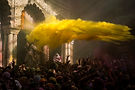
These are some of the photographs I’ve taken over the past few years, during dozens of workshops and on other visits to the cities where I teach. Even in places I’ve returned to many times, I look for streets I haven’t photographed, explore other neighbourhoods and meet new people. I use those visits to make new photographs and plan different routes and locations for future groups. That’s why no two workshops are the same, even in the same city.